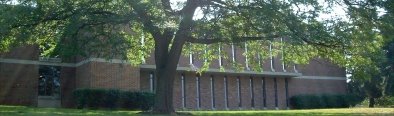
I have just completed the annual task of compiling library statistics for ATS and ATLA a little later than usual, but still before the deadline. I should preface what follows by stating that I like statistics. I like being able to break complex processes down into neat rows of numbers and then lining up those rows of numbers on a spreadsheet. It gives me a secure feeling inside to see all that data marshalled into an eye-friendly format that can be surveyed historically for trends and changes. (Yes, I was one of the popular kids in high school.)
But there is that nagging feeling that an awful lot of ambiguity falls by the wayside when statistics are made. What about the book that comes with full PDF accessibility on a web site for registered purchasers? Did I purchase a book or access to a book? And if I purchased both, how much did each cost? If the publisher helpfully threw in a CD plastered inside the back cover, how do I record that much less circulate it? (Answer: Throw out the CD, and no one will ever know.) Then there are those misleadingly simple numbers about staff and staff salaries. I had one year where a part time professional librarian quit part way through the year. Do I then measure her contribution to staffing totals as 1/4 of a librarian? Or 5/12? The Devil is in the details, which means that there is something diabolical lurking in the white space around those neat rows of numbers.
What is especially troubling to my orderly soul is that we then construct empires out of aggregates of these numbers. "Peer comparison" is one of the benchmarks for how we're doing. It is always much easier to compare yourself to your peer when they are a compact, distant set of numbers, not a flesh and blood institution with crows feet and callused elbows and a host of other minor imperfections that jump out at you. I can say with great confidence that all the libraries in all the ATS schools reported total holdings of 49,280,000 volumes in the 2007-2008 ATS Factbook. (Don't believe me? You can double-check that fact -- I double-dog dare you.) The correlation between that number and the actual number of volumes in all of our libraries ... let's just say I hope that NASA doesn't depend on it to calculate the trajectory for the next Mars mission.
But, like many of my colleagues, I have turned a stony countenance toward those ambiguities, guesses, and WAGs and have now submitted my tidy spreadsheet of numbers to be laid quietly to rest in orderly rows with everyone else's numbers. In addition to being like laws and sausages, statistics are also like cemetaries. It's better not to dig up what lies beneath.
Showing posts with label Stuff That Happens In Libraries. Show all posts
Showing posts with label Stuff That Happens In Libraries. Show all posts
Wednesday, November 26, 2008

Monday, September 15, 2008
Many Returns from Hurricane Ike
 I know that most of us in the geographic region of the country known as Chicagoland have little to complain about compared to those of you in Texas and other parts of the country that bore the brunt of Hurricane Ike's fury. But I did see in a weather map on Saturday evening that Ike had pushed bands of rain across the Midwest and even as far north and east as Buffalo, NY.
 When I came into the library Monday morning, I was surprised to find that four boxes of books in my office had been soaked by a leak. I can't even blame this small-scale disaster on that venerable achilles-heel of libraries: our flat roof. Instead, we evidently had a strong enough west wind to push the heavy rain in around a window with cracked glazing. (Though our flat roof and clerestory also leaked as they usually do.) On the positive side, instead of being boxes of new books to be added to our collection, these were books that had been culled from donations to go toward our book sale.
At the moment, we're still drying out in the Chicago suburbs and laying on more sandbags while waiting for some of the area rivers to crest. I pray that other libraries damaged by Ike will recover quickly.
Monday, July 14, 2008
OPAC Disease?
Just when you thought it was safe to go back into the library: Many thanks to the students at Mary Gates Hall for demonstrating the presence of fecal coliform bacteria on the keyboards in the library and computer lab as reported in The Chronicle.
Yet another variant on The Name of the Rose -- don't lick that thumb after hitting the space bar!
Yet another variant on The Name of the Rose -- don't lick that thumb after hitting the space bar!
Friday, April 18, 2008
Food in the Seminary Library
A beautiful Friday in Chicagoland with warm breezes and vigilant geese staking out their patch of library turf seems like a good day to blog about one of the lighter aspects of library life: food in the library.
The Chronicle has posted an article about the more relaxed attitude toward food that typifies the hip, turn-of-the-century academic library. "[Morningside] College has joined those that are casting aside their libraries' stuffy images by allowing students and faculty members to chow down — the "no food allowed" signs and wagging fingers are gone — amid the books and computers."
We have done the same at our library. Two years ago, We replaced our "No Food Or Drink Allowed" signs with signs that say "Please Keep Drinks In Covered Containers". We included helpful images of travel mugs lest students become confused and decide that a keg is also a covered container. (Those zany German Baptists!) Our food policy is basically a "don't ask, don't tell" policy--the sign only says to keep your drink in a covered container. A sandwich, a candy bar, a McBag supper are not uncommon sights now in a student study carrel. An entire pizza is possible, though apt to draw freeloaders. We did have a study room completely redecorated once for--I am not making this up--a marriage proposal that I believe also included celebratory snacks. (And this was before the kinder, gentler food policy.)
Students do appreciate the new policy. Previously, some students would stand out in the hallway to scarf their food before entering the library (a good sign of a future associate or executive pastor); others would stop at the desk and ask if we minded if they brought a bag of M&Ms into the library (the future senior pastors); others would just camouflage their latté and bagel underneath a folded jacket and head straight for the study carrels in the lower level (future youth pastors). Now everything is above-board, no slinking required. (Though the current issue of YouthWorker is still apt to turn up missing.)
There really hasn't been a down-side to the change in policy. Our cleaning crew sometimes has a few extra wrappers to pick up. One of our ponderous reading tables has been graced with a ghostly coffee mug ring caused evidently not by liquid but by heat. (Shroud of Turin scholars are welcome to stop by to see if they can duplicate the process.) The occasional coffee or cola splort on the carpet doesn't happen any more often now than it used to before we instituted the new policy. I haven't worried about the exposure of books to food, as that is what happens anyway when the books are checked out, though common courtesy should keep one from turning the pages with the same fingers that have been holding the Cheeto. (Sort of a Name-of-the-Rose effect in reverse.)
We have even gone so far as to offer food as a way to lure students into the library. We do not have the space or finances to set up a library café, but we do provide beverages and study snacks every quarter the week before finals. I used to have to cover over the "No Food Allowed" signs during our study break weeks, but now we can serve food out in the open without creating confusion over the library policy. Provided we don't include a keg.
The Chronicle has posted an article about the more relaxed attitude toward food that typifies the hip, turn-of-the-century academic library. "[Morningside] College has joined those that are casting aside their libraries' stuffy images by allowing students and faculty members to chow down — the "no food allowed" signs and wagging fingers are gone — amid the books and computers."
We have done the same at our library. Two years ago, We replaced our "No Food Or Drink Allowed" signs with signs that say "Please Keep Drinks In Covered Containers". We included helpful images of travel mugs lest students become confused and decide that a keg is also a covered container. (Those zany German Baptists!) Our food policy is basically a "don't ask, don't tell" policy--the sign only says to keep your drink in a covered container. A sandwich, a candy bar, a McBag supper are not uncommon sights now in a student study carrel. An entire pizza is possible, though apt to draw freeloaders. We did have a study room completely redecorated once for--I am not making this up--a marriage proposal that I believe also included celebratory snacks. (And this was before the kinder, gentler food policy.)
Students do appreciate the new policy. Previously, some students would stand out in the hallway to scarf their food before entering the library (a good sign of a future associate or executive pastor); others would stop at the desk and ask if we minded if they brought a bag of M&Ms into the library (the future senior pastors); others would just camouflage their latté and bagel underneath a folded jacket and head straight for the study carrels in the lower level (future youth pastors). Now everything is above-board, no slinking required. (Though the current issue of YouthWorker is still apt to turn up missing.)
There really hasn't been a down-side to the change in policy. Our cleaning crew sometimes has a few extra wrappers to pick up. One of our ponderous reading tables has been graced with a ghostly coffee mug ring caused evidently not by liquid but by heat. (Shroud of Turin scholars are welcome to stop by to see if they can duplicate the process.) The occasional coffee or cola splort on the carpet doesn't happen any more often now than it used to before we instituted the new policy. I haven't worried about the exposure of books to food, as that is what happens anyway when the books are checked out, though common courtesy should keep one from turning the pages with the same fingers that have been holding the Cheeto. (Sort of a Name-of-the-Rose effect in reverse.)
We have even gone so far as to offer food as a way to lure students into the library. We do not have the space or finances to set up a library café, but we do provide beverages and study snacks every quarter the week before finals. I used to have to cover over the "No Food Allowed" signs during our study break weeks, but now we can serve food out in the open without creating confusion over the library policy. Provided we don't include a keg.
Sunday, April 15, 2007
Of Leaks & Library Architecture
A wise man I know once said that there are three things that one should never have in a library: a skylight, a flat roof, and a spiral staircase. We have two of the three items -- a skylight and a flat roof -- and as a result, we do get leaks in our library:

Fortunately, this latest leak is one that our maintenance crews can patch for us. Until they have a chance to work on it and then test the roof to see if it is watertight again, we are moving all of our current periodicals out of harm's way:

And that, of course, is the problem with flat roofs, especially ones with skylights in them -- no matter how well-constructed they are, water will eventually work its way under a seam or along a drainage pipe and into your building. Buckets are often a librarian's best friend. Blessed is the library whose roof is pitched: The rains come down, the streams rise, and the winds blow and beat against that library; yet it does not leak.

Fortunately, this latest leak is one that our maintenance crews can patch for us. Until they have a chance to work on it and then test the roof to see if it is watertight again, we are moving all of our current periodicals out of harm's way:

And that, of course, is the problem with flat roofs, especially ones with skylights in them -- no matter how well-constructed they are, water will eventually work its way under a seam or along a drainage pipe and into your building. Buckets are often a librarian's best friend. Blessed is the library whose roof is pitched: The rains come down, the streams rise, and the winds blow and beat against that library; yet it does not leak.
Saturday, April 7, 2007
Attack Geese
I confess that there is not anything theological about this post. It can be filed under the general heading of "Stuff That Happens In Libraries". Or, in this case, around many buildings in the midwest. I'm not sure what the origins of corporate ponds are, but by constructing so many of them, we have created a marvelous artificial environment for Branta canadensis, the Canadian goose:

Because of our temperate climate in the midwest and disruptions in their migratory routes due to vehicular and air traffic, these geese have become non-migratory, or, as they are often called in the environmental literature, "resident". (Can "entitlement" be far behind? Beware of activist geese forming voting blocks in your area.)
Spring is the time when a young goose's fancy lightly turns to thoughts of love, so midwesterners everywhere must put up with naked geese cohabiting in their front yards. Or by their front doors, which often happens at our library. Being naturally territorial and stoked on female goose pheremones, the males become quite aggressive this time of year. It is not uncommon for patrons leaving our library to have to suddenly backpedal back inside the library or make a quick dash down the hill toward the parking lot with a goose in hot pursuit. Students attempting to take a shortcut across the quad are often re-routed by the charge of the goose brigade as papa goose comes hurrying out from behind the hedge, hissing and snapping. Goose poop removal is practically a full time occupation for our maintenance crews. We have tried various goose abatement programs from destroying eggs to jumping up and down and yelling to small dogs, but so far, the geese have maintained the upper webbed foot. The best we can do is aim for a policy of segregation, making sure that everybody knows their place:


Because of our temperate climate in the midwest and disruptions in their migratory routes due to vehicular and air traffic, these geese have become non-migratory, or, as they are often called in the environmental literature, "resident". (Can "entitlement" be far behind? Beware of activist geese forming voting blocks in your area.)
Spring is the time when a young goose's fancy lightly turns to thoughts of love, so midwesterners everywhere must put up with naked geese cohabiting in their front yards. Or by their front doors, which often happens at our library. Being naturally territorial and stoked on female goose pheremones, the males become quite aggressive this time of year. It is not uncommon for patrons leaving our library to have to suddenly backpedal back inside the library or make a quick dash down the hill toward the parking lot with a goose in hot pursuit. Students attempting to take a shortcut across the quad are often re-routed by the charge of the goose brigade as papa goose comes hurrying out from behind the hedge, hissing and snapping. Goose poop removal is practically a full time occupation for our maintenance crews. We have tried various goose abatement programs from destroying eggs to jumping up and down and yelling to small dogs, but so far, the geese have maintained the upper webbed foot. The best we can do is aim for a policy of segregation, making sure that everybody knows their place:

Subscribe to:
Posts (Atom)


