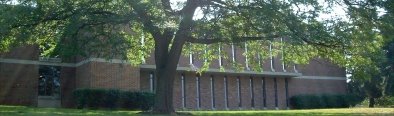
I spent most of my time today attending two pre-conference workshops: One on doing scholarly writing for the soon-to-be-unveiled new journal, Theological Librarianship, and one on ways to become more active in raising funds for the library.
The workshop on writing for Theological Librarianship was a good follow-up to a continuing education course on scholarly writing that I took earlier in the year. The course was an 8-week, online course sponsored by the ATLA Professional Development Committee and the Publications Committee, offered through UIUC's LEEP program. In this morning's pre-conference workshop, we took a look at general principles for good scholarly writing and then attended break-out sessions for a closer examination of writing either articles or book reviews or bibliographic essays. Beth Bidlack's presentation inspired me to track down three books after the conference to add them to our collection:
The Craft of Research (3rd ed.) by Booth, Colomb, and Williams;
How to Write a BA Thesis by Charles Lipson;
The Craft of Revision (5th ed.) by Donald Murray
A theme common to both the continuing education course that I took and the workshop is that writing is really re-writing: "Revision is not the end of the writing process but the beginning." (A quote from Murray.) Theological Librarianship has an excellent editorial team eager to encourage everyone to dive into the re-writing process and submit something for publication. (We're all anxiously awaiting the launch of Theological Librarianship on Saturday.)
The afternoon workshop on library fund raising was very informative and introduced me to many new resources on grant writing. Sara Myers from Columbia Theological Seminary walked us through the process of developing a contextual analysis--what I think of as a qualitative, narrative analysis--of our library's needs. Barbara Kemmis from ATLA shared her grant-researching expertise from working with the Donors Forum in Chicago. And Lorraine Olley from University of St. Mary of the Lake explained how she prepares case statements for library projects in partnership with her development office. While I knew that databases like the Foundation Center's online Foundation Directory existed, I did not realize that anyone can access them for free via their nearest cooperating collection. There is also a wealth of free tools and resources on the Foundation Center's web site. Here's a thought: What if ATLA could compile and post a list of grants received by theological libraries to assist our institutions in identifying foundations and agencies with a history of funding theological scholarship?
Showing posts with label Scholarly Communication. Show all posts
Showing posts with label Scholarly Communication. Show all posts
Wednesday, June 25, 2008

Monday, November 5, 2007
Theological Publishing & Scholarly Publishing
A new report from ACRL, Establishing a Research Agenda for Scholarly Communication: A Call for Community Engagement, is calling for further research on eight different aspects of the current system of scholarly communication. I was intrigued by the following paragraph from section 4, Authorship and Scholarly Publishing:
"When faculty employ and create new forms and techniques, evaluating their work against traditional measures is a particular challenge. Although studies document the conservatism and constraining influence of scholarly promotion and tenure review processes and reward systems, we do not yet have deep insight into how they can evolve to recognize and embrace new forms of scholarship. The problem is acute for the creators of digital scholarship, which rarely enters the formal publishing stream, yet is a creative, scholarly act that can influence and underpin both present and future research. But authorship of these programs is not yet rewarded as a form of scholarly communication of the first order in most disciplines."
My suspicion is that theological publishing is not at the bleeding edge of this process of "creating new forms and techniques", but it certainly is getting there. In faculty committees at our seminary we have already been discussing how to evaluate such contributions as faculty blogging. As a librarian, I am particularly interested in the issue of preserving such new forms of faculty publication. Does anyone out there have a system yet for preserving faculty blogs? Can theological librarians have a voice in influencing the nature of copyright contracts for theological publications? I am glad to see ACRL calling for comment and research in areas such as these, and I hope that theological librarians can be part of the library community that responds to this call.
"When faculty employ and create new forms and techniques, evaluating their work against traditional measures is a particular challenge. Although studies document the conservatism and constraining influence of scholarly promotion and tenure review processes and reward systems, we do not yet have deep insight into how they can evolve to recognize and embrace new forms of scholarship. The problem is acute for the creators of digital scholarship, which rarely enters the formal publishing stream, yet is a creative, scholarly act that can influence and underpin both present and future research. But authorship of these programs is not yet rewarded as a form of scholarly communication of the first order in most disciplines."
My suspicion is that theological publishing is not at the bleeding edge of this process of "creating new forms and techniques", but it certainly is getting there. In faculty committees at our seminary we have already been discussing how to evaluate such contributions as faculty blogging. As a librarian, I am particularly interested in the issue of preserving such new forms of faculty publication. Does anyone out there have a system yet for preserving faculty blogs? Can theological librarians have a voice in influencing the nature of copyright contracts for theological publications? I am glad to see ACRL calling for comment and research in areas such as these, and I hope that theological librarians can be part of the library community that responds to this call.
Subscribe to:
Posts (Atom)


